Improving Production Scheduling: From 139 Steps to 98 an a Smarter, More Connected Process


A Lean Six Sigma approach to reducing administrative waste, improving coordination, and creating more reliable production schedules.
Production scheduling is one of those business processes that can look straightforward on the surface but become surprisingly complicated behind the scenes.
A schedule may tell us what needs to be produced and when, but how does that information get there? How many times is it entered, copied, reformatted, reviewed, or handed off before production can actually begin?
Sometimes, the biggest scheduling challenges aren't happening on the production floor. They're hiding in the administrative work, disconnected systems, inconsistent information, and handoffs that support the schedule.
In a recent bridge production scheduling improvement initiative, we took a closer look at a process involving 139 steps. What we discovered was a great example of why understanding the current state is so important before jumping into solutions.
🔍 Start by Understanding the Current State
One of the first principles of Lean Six Sigma is simple: You cannot effectively improve a process you don't fully understand.
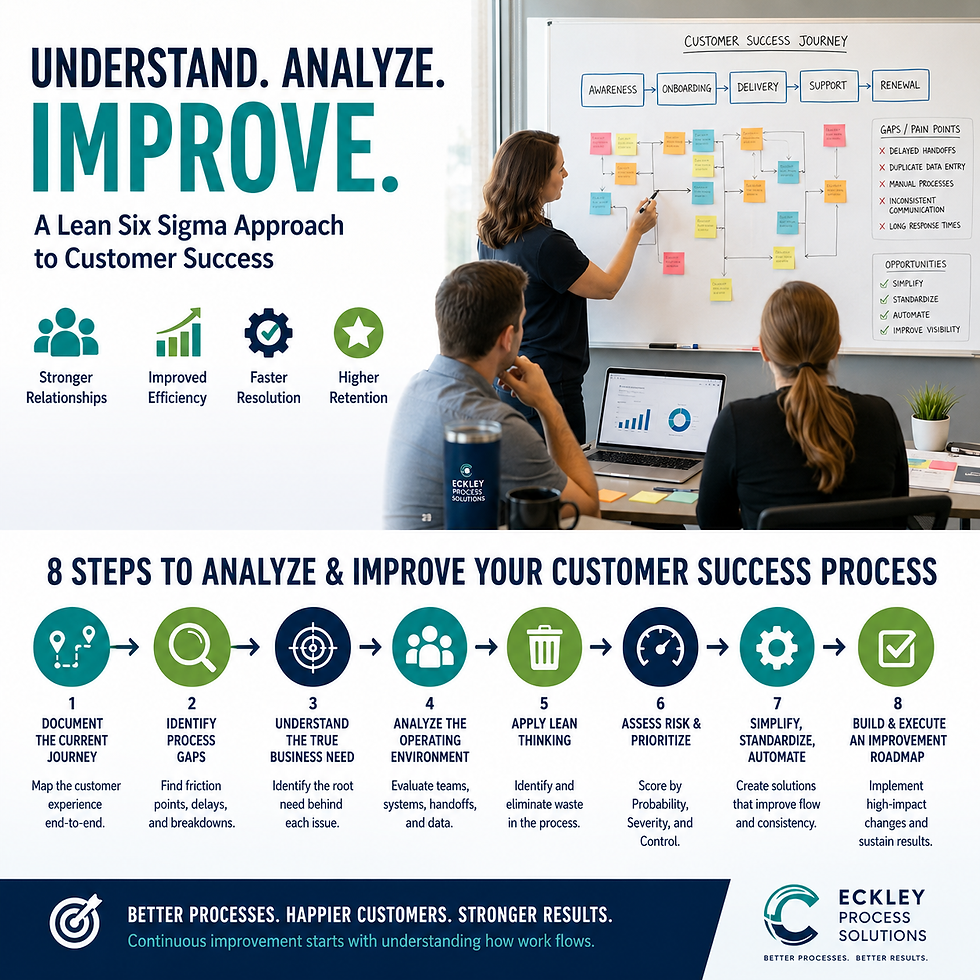
Rather than immediately recommending new software or changing the scheduling approach, we started by documenting the existing workflow.
We asked questions such as:
Where does production information originate?
Who touches the information throughout the process?
How many times is the same information entered or transferred?
Where do delays, confusion, and rework occur?
What information does each department need to do its job?
Where are the opportunities to simplify and standardize?
The current-state process map helped make the invisible work visible.
And that's where things got interesting!
🚧 What We Discovered: The Hidden Waste in Production Scheduling
The assessment uncovered several opportunities to streamline the process and improve information flow.
1. Manual Data Entry and Duplicate Work
Production information was being manually transferred from Excel into Word documents.
Every additional entry creates another opportunity for errors, inconsistencies, and wasted time.
From a Lean perspective, this is a classic example of overprocessing. We're spending time moving information around instead of creating value.
2. Multiple Versions of the Same Information
Project information existed in multiple locations and formats, creating a need to keep everything synchronized.
When information is duplicated, teams must spend additional time verifying which version is accurate.
This can lead to confusion, unnecessary communication, and preventable rework.
3. Inconsistent Naming Conventions
Different naming conventions across systems and physical labels introduced another layer of complexity.
A part, project, or material should be easy to identify regardless of where someone encounters it.
Standardization helps eliminate confusion and creates a common language across departments.
4. Opportunities for Better BOM Management
The review also identified opportunities to improve Bill of Materials (BOM) rounding and material calculations.
Small discrepancies in material requirements can create larger problems downstream, including shortages, excess inventory, and production delays.
Accurate material planning is an important part of building a reliable production schedule.
5. Engineering and Operations Handoffs
Production scheduling doesn't operate in isolation.
Engineering, scheduling, material management, kitting, and production all depend on timely and accurate information.
When responsibilities, expectations, or handoffs aren't clearly defined, delays and misunderstandings can become part of the normal workflow.
And that's exactly what process improvement is designed to challenge!
💡 Designing a Smarter Future State
Once we understood the current process and identified opportunities, we shifted our attention to the future state.
The vision wasn't to introduce complexity or add another system. It was to simplify the process using the tools and information already available wherever practical.
The proposed direction included:
A more streamlined Excel-based production workbook.
Standardized project and production information.
Reduced duplicate data entry and document creation.
Improved consistency in naming conventions.
Better BOM rounding and material planning.
Clearer handoffs between engineering, scheduling, kitting, and production.
The objective is to create a process that is easier to follow, easier to manage, and less dependent on individual knowledge or workarounds.
The goal isn't simply to make scheduling faster. It's to make the entire process more reliable.
🛠️ Applying Lean Six Sigma to Production Scheduling
This project is a great example of how the DMAIC methodology can guide practical process improvements.
DEFINE – Establish the Opportunity
Understand the business problem, identify stakeholders, and establish what successful production scheduling should look like.
MEASURE – Document the Current State
Map the workflow, identify the steps, understand the handoffs, and establish baseline performance.
ANALYZE – Identify Waste and Root Causes
Look for duplicate work, manual transactions, unnecessary approvals, information gaps, inconsistent standards, and process delays.
IMPROVE – Design and Test the Future State
Simplify the workflow, standardize information, eliminate unnecessary steps, and develop solutions that address the actual causes of inefficiency.
CONTROL – Sustain the Improvements
Establish standard work, clear ownership, performance measures, and ongoing reviews to ensure the improved process continues delivering results.
And remember: improvement doesn't end when the future-state map is complete. Prototypes need to be tested, feedback needs to be incorporated, and the process needs to be refined.
📊 What Should You Measure?
If you want to know whether production scheduling is actually improving, look beyond the number of steps in the process.
Consider tracking:
Schedule Adherence: How consistently is production completed according to the planned schedule?
Schedule Attainment: What percentage of planned production is actually completed?
Schedule Changes: How frequently does the production schedule need to be revised?
Material Availability: Are required materials available when production needs them?
Production Readiness: Are engineering, documentation, and kitting requirements complete before the scheduled start?
Administrative Processing Time: How much time is spent preparing, updating, and communicating production schedules?
Rework and Data Errors: How often do incorrect or inconsistent production details require correction?
These measures help connect process improvements to actual operational performance.
After all, reducing administrative steps is valuable, but the real win is better flow, fewer disruptions, and more predictable production.
🎯 The Bigger Lesson: Simplify Before You Automate
One of the biggest mistakes organizations make is assuming technology alone will solve process problems.
But automating a complicated process doesn't necessarily make it better. Sometimes it simply allows waste to happen faster!
Before investing in new systems or building elaborate solutions, take the time to understand how work actually gets done.
Look for opportunities to:
Eliminate unnecessary steps.
Reduce duplicate information.
Standardize how work is performed.
Improve communication between departments.
Clarify process ownership.
Make information easier to access and use.
Then determine where technology can support the improved process.
Lean thinking isn't about doing more with less just for the sake of efficiency. It's about removing the obstacles that prevent people from doing their best work.
🔄 Continuous Improvement Never Stops
Moving from a 139-step process toward a more streamlined, standardized production scheduling workflow is about more than reducing steps.
It's about creating a better connection between planning and execution.
When engineering, scheduling, material management, and production work from consistent information and clearly defined processes, everyone benefits.
Less time searching, retyping, correcting, and clarifying means more time focused on delivering value.
And that's what operational excellence looks like in practice.
A question to consider: If you mapped your production scheduling process from beginning to end, how many steps would you discover that exist simply because information isn't standardized or systems aren't connected?
You might be surprised by what you find!
Ready to make your processes work smarter?
At Eckley Process Solutions, we help organizations uncover hidden inefficiencies, simplify workflows, and build sustainable process improvements using Lean Six Sigma and practical business process analysis.


Comments