Translating Business Needs into System & Workflow Requirements: The Step That Determines Project Success

"Technology doesn't solve business problems. Well-defined business requirements do."
One of the most common reasons technology projects struggle isn't because the software was bad.
It's because the organization implemented exactly what they asked for—not what they actually needed.
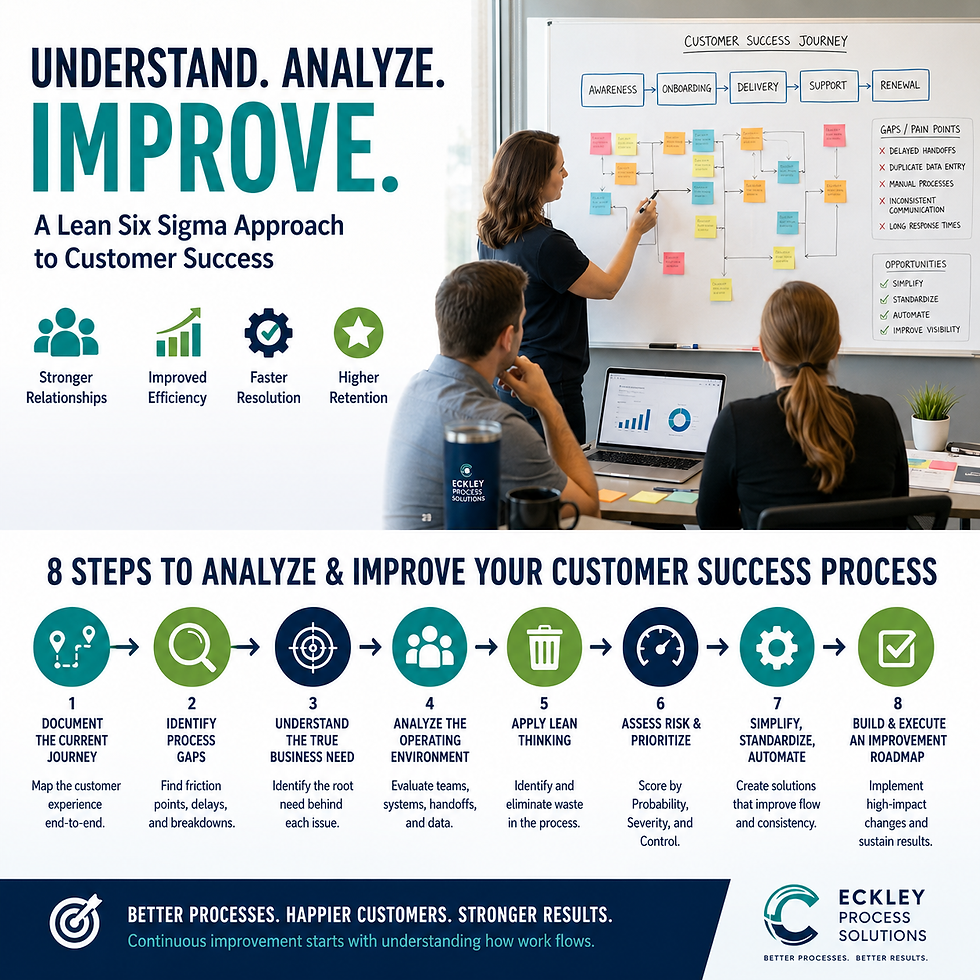
During a recent global business process transformation, my team spent more than 70 hours facilitating discovery sessions before recommending a single system enhancement. We mapped current-state processes, conducted SIPOC analyses, identified more than 230 process gaps, performed root cause analysis, and collaborated with subject matter experts to define future-state workflows before discussing technology solutions.
That investment in understanding the business paid dividends throughout the project.
The lesson?
Great systems begin with great requirements.

The Trap Organizations Fall Into
Imagine a stakeholder says:
"We need a better workflow."
That sounds like a requirement.
It isn't.
It's a symptom.
The real requirement might be:
approvals take five days
managers don't know where requests are
duplicate data entry causes errors
nobody receives status updates
information is stored in multiple systems
Until those problems are understood, selecting software is simply guessing.
Business Needs vs. System Requirements
One of my favorite ways to explain the difference is this:
Business Need
Describes why change is necessary.
Example:
Reduce project setup time so teams can begin serving customers faster.
Workflow Requirement
Describes how the business process should operate.
Example:
The workflow shall automatically assign project tasks based on project type.
System Requirement
Describes what the application must do.
Example:
The system shall create a project record automatically after contract approval and notify the assigned project manager within five minutes.
Each layer builds upon the previous one.
Skip the business need...
...and every requirement becomes an assumption.
The Framework I Use
1. Understand the Business Problem
Start with outcomes—not software.
Ask questions like:
What problem are we solving?
Why does it matter?
What happens if we do nothing?
How will we know we've improved?
This creates alignment before anyone starts discussing features.
2. Learn the Current Process
You can't improve what you don't understand.
In this project, the discovery effort included:
Current-state process maps
SIPOC diagrams
Value Stream Mapping
Cross-functional workshops
Discovery interviews
Document impact assessments
The goal wasn't documentation.
The goal was understanding.
3. Listen to the People Doing the Work
This is where the gold is.
Instead of asking:
"What features do you want?"
Ask:
What slows you down?
Where do errors happen?
What information is missing?
What workarounds have you created?
Which approvals create delays?
People rarely describe requirements.
They describe frustrations.
Your job is translating frustrations into requirements.
4. Find the Root Cause
One of the most valuable activities in our project wasn't creating process maps.
It was identifying why problems existed.
The team performed root cause analysis using techniques such as:
5 Whys
Fishbone (Ishikawa) Diagrams
Gap Analysis
Pareto Analysis
Priority Matrices
Interestingly, the analysis showed that the majority of identified gaps were related to system and application issues, while the most common forms of waste included motion, overprocessing, and defects. Those findings helped focus improvement efforts where they would have the greatest impact.
When you solve root causes instead of symptoms, requirements become much clearer.
5. Translate Needs into Actionable Requirements
Here's where business analysts add tremendous value.
Instead of documenting vague statements like:
❌ "The process takes too long."
Translate it into:
✅ The system shall automatically route approvals within 24 hours.
Instead of:
❌ "Communication is poor."
Document:
✅ Users shall receive automated status notifications when approvals are completed, rejected, or overdue.
Good requirements are:
specific
measurable
testable
understandable
business-focused
6. Document Business Rules
Requirements aren't just system functions.
They also include:
business rules
decision logic
required data
approval paths
exception handling
integrations
notifications
reporting requirements
These details prevent surprises during implementation.
7. Validate Before You Build
One of the most overlooked steps is validating requirements with stakeholders before development begins.
Ask them:
"If the system worked exactly like this, would it solve your problem?"
If the answer isn't an enthusiastic yes...
Keep refining.
Changing a requirement on paper is inexpensive.
Changing a completed system is not.
What This Looks Like in Practice
During our project, the future-state recommendations weren't simply software requests. They addressed the underlying business needs by improving workflow through:
automated notifications
improved visibility into project status
better synchronization between systems
enhanced scheduling capabilities
standardized project setup
streamlined reporting
improved document management
simplified administrative activities
Notice that every recommendation supported a business objective—not just a software feature.
Final Thoughts
The best technology projects don't begin with a vendor demonstration.
They begin with curiosity.
Before selecting a system...
Before designing a workflow...
Before writing requirements...
Take time to understand the business.
Because when you can clearly translate business needs into workflow and system requirements, you're no longer implementing software.
You're designing a better way to work.


Comments